Recycling and Sustainability for Landscaping Ickenham
 Landscaping Ickenham can be designed and maintained with a strong environmental focus, and that begins with practical recycling habits at every stage of a project. From soil handling and green waste separation to the reuse of timber, stone, and packaging, a thoughtful landscaping Ickenham approach reduces what goes to landfill and keeps valuable materials in circulation. Our recycling and sustainability commitment is built around simple, measurable actions that support cleaner sites, lower emissions, and better resource use across the local area.
One of the clearest goals is to maintain a recycling percentage target of 90% for suitable non-hazardous site materials wherever possible. That means separating organic waste, inert materials, metals, plastics, cardboard, and reusable aggregates before disposal. In landscaping in Ickenham, this helps create a more efficient workflow and supports a circular approach to materials. Rather than treating every removal as waste, the focus is on identifying what can be reused, repurposed, chipped, composted, or sent to specialist recovery streams.
For day-to-day operations, local transfer stations play an important role. Materials collected from landscaping Ickenham projects can be sorted and routed through borough-approved facilities that handle green waste, soil, rubble, and mixed recyclables. In the wider area, local transfer stations and reuse centres help manage separated loads in line with borough approaches to waste separation, where residents and contractors are encouraged to keep garden waste, hardcore, and general waste apart. This supports cleaner recycling streams and reduces contamination.
Local Recycling Practices in Landscape Work
In practical terms, landscaping Ickenham recycling begins on site. Arisings from hedge cutting, pruning, and lawn renovation can be chipped for mulch or sent for composting, while turf and topsoil may be screened and reused where conditions allow. Broken paving, bricks, and concrete can often be diverted as hardcore rather than discarded. Clear segregation of materials also means that metal edging, fixings, and offcuts can be collected for metal recycling, and cardboard or plastic packaging from new materials can be bundled separately. These steps may seem small, but together they make a meaningful difference.
 The boroughs surrounding Ickenham have increasingly focused on waste separation as a core part of sustainability, and landscaping teams can work in step with that approach. By keeping organics away from mixed rubbish and ensuring inert waste is not contaminated, more material can be recovered through local recycling channels. This is especially relevant when managing garden clearances, driveway refreshes, fence replacements, and planting upgrades, where mixed materials are often generated. A landscaping Ickenham service that respects these separation principles supports broader local recycling performance.
It also helps to plan purchases with sustainability in mind. Using suppliers that reduce excessive packaging, selecting durable materials, and ordering accurate quantities all cut down on waste before it begins. Responsible landscaping in Ickenham is not only about what leaves the site; it is also about preventing unnecessary waste from arriving in the first place. Reclaimed timber, recycled aggregates, and long-life planting structures can all reduce the environmental footprint of an outdoor project.
Charity Partnerships and Reuse
 A strong sustainability strategy also includes partnerships with charities and community organisations. Items that still have life left in them, such as planters, clean timber offcuts, garden furniture, paving slabs, topsoil, pots, or suitable decorative materials, may be redirected to charities, local community groups, or reuse initiatives where appropriate. In landscaping Ickenham, this means that usable resources can support community gardens, school projects, and low-budget outdoor improvements rather than being treated as waste.
Charitable partnerships are particularly valuable when clearing properties or refurbishing gardens that include surplus materials in good condition. Instead of disposing of everything, careful assessment can identify items suitable for donation or reuse. This approach reduces landfill, extends product life, and supports local causes at the same time. It also aligns well with the values behind sustainable landscaping in Ickenham, where practical service and environmental care work together.
Such reuse efforts are complemented by responsible handling of organic materials. Branches, grass clippings, and leaves can be processed separately, while untreated wood may be chipped or converted for recovery depending on condition. By combining charity donations with robust recycling streams, landscaping Ickenham projects can achieve a more balanced waste hierarchy: reduce, reuse, recycle, and only then dispose. That hierarchy is central to sustainable site management and makes operations more resilient over time.
Low-Carbon Vans and Efficient Transport
Transport is another major part of the sustainability picture. The use of low-carbon vans helps reduce emissions generated by travel between sites, suppliers, transfer stations, and recycling facilities. Modern low-emission vehicles, efficient route planning, and careful load management all contribute to a smaller carbon footprint. In landscaping Ickenham, this is especially useful because small but frequent collections can add up quickly if journeys are not planned well.
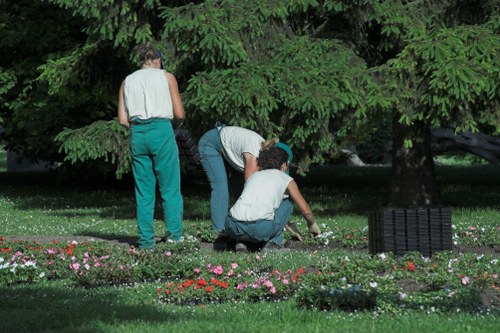 Low-carbon vans support a greener service by reducing fuel use and lowering local air pollution. They also reflect a wider commitment to sustainability in everyday operations, not just in waste management. When combined with smart scheduling, grouped collections, and accurate material estimates, they help landscaping in Ickenham become more efficient and less resource-intensive. Efficiency and environmental responsibility are closely linked, especially in a borough setting where multiple sites may be served in a single day.
Another practical benefit of a cleaner vehicle fleet is that it reinforces the overall message of responsible site care. Clients increasingly look for landscaping Ickenham providers that value low-impact methods, and transport choices are part of that picture. Whether carrying compost, reclaimed materials, or tools for garden renovation, the aim is to keep movement streamlined while supporting greener operations. Small changes in fleet management can have a noticeable effect over the course of a season.
Looking Ahead to a Greener Landscaping Standard
 The future of landscaping Ickenham should continue to move toward higher recycling rates, lower emissions, and more circular use of materials. Reaching and maintaining a 90% recycling target is ambitious, but it is realistic when waste is separated properly, local transfer stations are used effectively, and partnerships with charities create reuse opportunities. This combination of measures helps ensure that sustainable landscaping is not just a statement, but a working standard.
As borough approaches to waste separation become more established, landscaping teams can support the same principles on private and commercial sites. That means separating green waste from rubble, keeping recyclable packaging clean, and identifying materials that can be donated or recovered. In landscaping Ickenham, sustainability is most successful when it is built into routine practice rather than added at the end of a job.
Recycling, reuse, and lower-carbon transport are all part of a modern landscaping approach that respects the local environment. With careful planning, partnerships, and a clear recycling percentage target, landscaping Ickenham can continue to deliver attractive outdoor spaces while reducing its impact on the planet. That balance between beauty and responsibility is what makes sustainable landscape work both practical and forward-looking.