Health and Safety Policy for Landscaping Ickenham
 Health and safety is central to every landscaping project, from small garden improvements to larger outdoor maintenance work. A clear policy helps ensure that employees, contractors, clients, and members of the public are protected from avoidable harm. In landscaping, the working environment can change quickly, so safety must be considered at every stage of the job.
This policy applies to all landscaping activities, including site preparation, planting, turfing, pruning, hard landscaping, waste removal, and the use of tools and machinery. The goal is to create a safe, organised, and professional working approach that reduces risk while maintaining high standards of workmanship. Every person involved in landscaping services is expected to follow this policy and take responsibility for their own actions.
 The company will take reasonable steps to identify hazards before work begins. Typical risks in landscaping work may include slips, trips, and falls; manual handling injuries; noise; dust; vibration; moving vehicles; sharp tools; and exposure to chemicals or contaminated materials. Where risks cannot be removed completely, suitable controls will be introduced to reduce them as far as possible.
All work must be planned with safety in mind. Before starting a task, the team should assess the site conditions, check access routes, and consider any hazards such as uneven ground, overhead services, hidden debris, or adverse weather. Risk assessments should be proportionate to the work involved and reviewed whenever conditions change. Good planning supports both safety and efficiency in garden landscaping.
Employees and contractors must use equipment only if they have been trained and authorised to do so. Tools, machines, and vehicles should be inspected before use and maintained in safe working order. Damaged or faulty equipment must be removed from service immediately. Protective equipment such as gloves, eye protection, hearing protection, safety boots, and hi-vis clothing must be worn when required. Personal protective equipment is an important control measure, but it does not replace safe working methods.
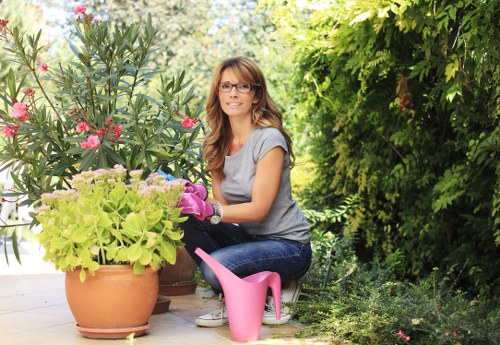 Manual handling is a common concern in landscaping projects. Heavy materials such as soil, paving, plants, timber, and waste should be moved using suitable aids wherever possible. If lifting is unavoidable, the load should be assessed first, and safe techniques should be used to prevent strain or injury. Team lifting may be necessary for bulky items, and no one should be expected to move loads beyond their safe capacity.
The safe use of machinery and powered tools is essential. Operators must follow manufacturer instructions and use guards, shields, and safety devices correctly. Equipment should never be used in a way that creates unnecessary risk to the operator or to others nearby. When working close to the public, pets, or property, extra care must be taken to prevent injury or damage. Clear boundaries and warning measures help keep landscaping teams and others safe.
Where chemicals are used, including fertilisers, weed treatments, or cleaning agents, they must be stored, handled, and applied safely. Suitable information should be available so that users understand the hazards and precautions. Only approved products should be used, and they must never be mixed or transferred into unlabelled containers. Good hygiene is also important: hands should be cleaned after handling materials, and food or drink should not be consumed in contaminated areas.
Weather can have a significant impact on safety. Heat, cold, rain, ice, and strong winds can all increase the likelihood of accidents or illness. Work should be adapted to conditions, with breaks, hydration, shelter, or revised timings used where needed. Outdoor safety also includes protection from sun exposure and the use of suitable clothing for the task and weather. Safe judgement is especially important in changing conditions.
The company expects all workers to maintain high standards of behaviour. Unsafe actions, working while impaired, ignoring instructions, or failing to report hazards are not acceptable. Supervisors must encourage open communication so that safety concerns can be raised early and addressed promptly. A strong health and safety culture helps prevent incidents before they happen.
Accidents, near misses, and dangerous occurrences should be reported as soon as possible. Prompt reporting allows the business to investigate causes, make improvements, and prevent repeat incidents. First aid arrangements should be available, and workers must know how to respond if someone is injured, ill, or exposed to a hazard. Emergency procedures should be understood by everyone involved in landscaping maintenance.
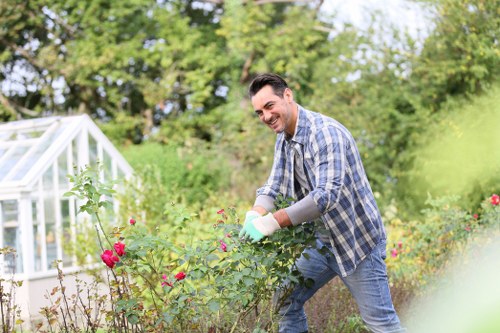 Waste must be managed safely and responsibly. Sharp objects, broken materials, soil, green waste, and chemical containers should be separated and disposed of appropriately. Sites should be left tidy and free from hazards at the end of each working period. Good housekeeping reduces the risk of slips, cuts, and trips and supports a more efficient workflow.
Training and competence are fundamental to this policy. Workers must receive information, instruction, and supervision suitable to the tasks they carry out. Refresher training should be provided where necessary, especially when new tools, techniques, or procedures are introduced. In landscape services, competence is not only about technical skill but also about working safely and consistently.
Management is responsible for reviewing this policy regularly and ensuring that it remains effective, relevant, and compliant with current expectations. Reviews should take account of incident reports, site observations, changes in work activities, and feedback from supervision. Continuous improvement is part of a responsible approach to safety.
 Every person involved in landscaping operations has a role in keeping the workplace safe. By following this policy, using common sense, and respecting established controls, the business can deliver reliable outdoor work while protecting people, property, and the environment. Safety is not a separate task; it is an essential part of every landscaping activity.